Power Play: How China Uses Video Games to Shape Global Perception
Under China's Digital Silk Road project, video games have become a tool to transport cultural values and exercise soft power. Today's study highlights how Tencent, as a dominant leader in the industry, has become a hub for and important player to reach China's goals.
• "... the global gaming industry emerges as a particularly interesting avenue for the dissemination of cultural values and soft power." [1]
• Tencent has acquired major stakes in international, Western companies to exercise influence over video games.
• Examples include Riot Games (League of Legends), Epic Games (Fortnite, Unreal Engine), Supercell (Clash of Clans), Krafton (PUBG), and FromSoftware (Dark Souls and Elden Ring).
• Within games, Chinese culture, traditions, themes, history, and deities are included to transport a favorable image of China and its culture.
• "This indicates that video games are a viable medium for soft power projection." [1]
With the rapid development of technology, China has expanded into the digital realm by advancing its infrastructure with the Digital Silk Road (DSR). Its goal is to enhance digital connectivity and cooperation across continents, underscoring its ambitions to secure its position as a global leader in the digital economy. These Digital Silk Road projects include undersea cables, satellite networks, and e-commerce platforms.
In the pre-digital era, cultural diplomacy was the dominant tool to connect with the rest of the world and transport cultural values—for instance, exchanging cultural artifacts, educational programs, and artistic performances. All of them act as means to foster mutual understanding between nations. Furthermore, the overall goal is to establish a positive view or appreciation for one's own culture, traditions, and values—China in this case.
In the new—digital—era, new tools such as video games, streaming, social media, and more have emerged. "Amidst the various components of the DSR, the global gaming industry emerges as a particularly interesting avenue for the dissemination of cultural values and soft power." [1]
"Video games, as interactive narratives, offer unique opportunities for cultural transmission and engagement. They encapsulate cultural values, historical narratives, and societal norms, making them potent tools for cultural diplomacy." [1]
A major hub needed for this to work is strong companies. One that probably pops right into your head is Tencent—a leading Chinese conglomerate. Over the past decades, Tencent has made major strategic investments within the gaming space to contribute to the DSR project, strengthening China's influence.
The company got its big breakthrough with the launch of WeChat (a super app that Chinese people use for everything, including messaging, social media, payments, etc.). In 2011, it stepped into the gaming world by acquiring Riot Games—you know, the company that developed League of Legends.
Since then, they've only gotten bigger. The table below shows some of the stakes in Western video game publishers they have. I highlighted the video games developed by these companies, including Fortnite and Clash of Clans.
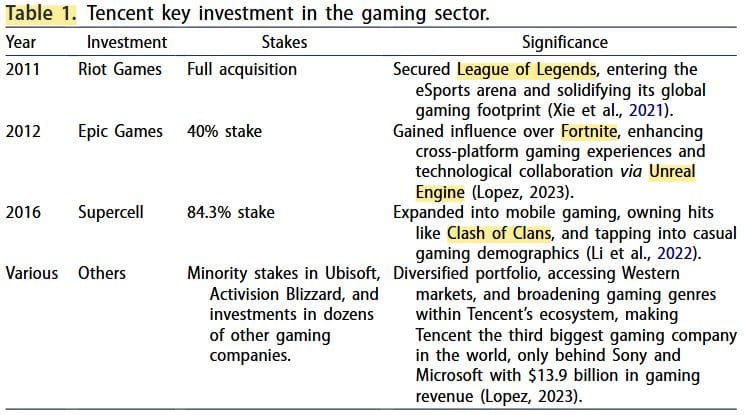
In addition, they also own stakes in Larian Studios (Baldur's Gate 3), FromSoftware (Dark Souls and Elden Ring), Krafton (PUBG), Ubisoft (Prince of Persia and Assassin's Creed), Activision Blizzard (World of Warcraft), Grinding Gear Games (Path of Exile), and many more.
Interestingly, I checked when Tencent bought its stake in Activision Blizzard; it was in 2012. Later that year, the World of Warcraft expansion Mists of Pandaria was released. If you're not familiar with the game, here's an image of the cover.
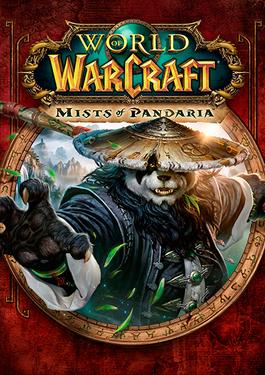
After checking some game reviews, it was perceived as a bad expansion—probably because it felt rushed and incorporated elements the players weren't familiar with. And that exactly fits the overall strategy outlined earlier, and what happened in other games: including Chinese cultural themes, characters, history, and deities. Think about League of Legends (Wukong), Fortnite (Monkey King and Gan), and events such as the Chinese New Year in World of Warcraft (Lunar Festival).
With all of this, the researchers of the study concluded that "This indicates that video games are a viable medium for soft power projection." [1]
"The comprehensive analysis of Tencent’s strategic investments in the global gaming industry underscores the sophistication with which the company has leveraged digital entertainment to bolster China’s soft power and extend its cultural reach worldwide." [1]
I hope you enjoyed this episode. Best,
Christian 🙂

References
[1] Yuan, 2025