From Watchers to Players: How Streamers Inspire Gamers to Join In
Livestreaming video games is a big part of the gaming community. Some of the viewers will start playing the same video game as their favorite streamer. But why is that? This study looks at the various factors that motivate viewers to fire up the same they just watched.
• Livestreaming of video games has become a major aspect in gaming.
• Streamers use various tools to maintain and nurture their community.
• When watching a streamer, various factors motivate viewers to start playing the same game.
• When perceived attractiveness, competence, and trustworthiness of the streamer increases, so does the perceived influence the streamer has.
• This creates a perception of value (why people watch) and leads to playing the video game themselves.
"Livestreaming, a dynamic and interactive form of social media" [1] has dramatically increased in recent years, especially during the COVID pandemic. In the realm of video games, players share their gameplay and interact with the viewers. This creates a highly engaging and communal experience.
Streamers are typically considered experts, having a comprehensive understanding of the game mechanics. Hence, they are a trusted source for both information and entertainment. A lot of top streamers are professional or former professional players. They skill level is way beyond that of the average viewer. On top of that, they stream for a living, meaning entertaining is their job.
Part of that job is engaging with the viewers. This fosters a sense of community and connectiveness between the streamer and viewers, but also among their audience (a genuine connection to a broader gaming community). To nurture this engagement, streamers use tools such as organizing tournaments, dispense giveways, hosting events.
Lastly, streamers usually have something to them–a distinct personality, humor, storytelling prowess etc. If they were annoying or dislikeable, no one would watch them.
The, often, most watched streamers are widely regarded as credible and valuable influencers, shaping their viewer's purchasing decisions (via promos or ads), and entice them to play games themselves.
However, it is unknown which factors lead to viewers of gaming live streams to firing up a game themselves. Some potential candidates include the, by the viewer, perceived attractiveness of the stream and streamer, competence of the streamer, and trustworthiness of the streamer. That's what today's study is about. Below, you can see their framework (don't worry, I'll go through it with examples).
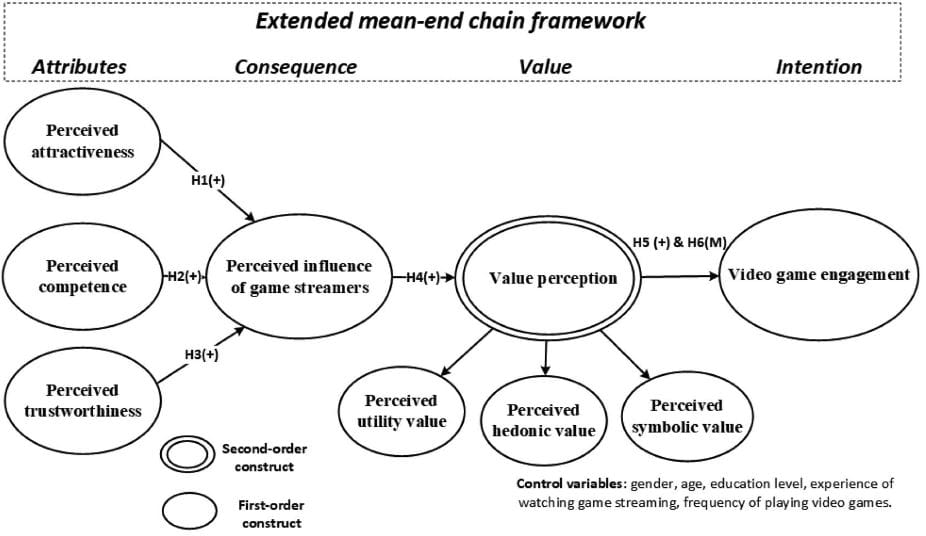
Does attractiveness (physical and likeability), trustworthiness (streamers' credibility, authenticity, and reliability), and competence (expertise, knowledge, and authority) determine the, by the viewers, perceived influence of streamers? In other words, to what extent are viewers "influenced or affected by the content, actions, and opinions of the streamer"? [1] As an example, if you think your beloved, favorite streamer is very competent, you may perceive his opinion (influence) has higher.
Next is the value perception (utility, hedonic, and symbolic values), the value that viewers get from the perceived influence of game streamers. To exemplify, if you believe a streamer has a good amount of influence, you may get some value from that, such as satisfying your needs (utility value), emotional value (enjoyment from watching or fun–hedonic value), and status or social significance (symbolic value).
"Finally, we use viewer video game engagement to describe the extent to which a viewer is willing to actively experience the video game that the game streamer has played." [1]
To underpin their framework, the researchers collected data from 465 Chinese participants, and ran some analysis.
📺 Watch 'n Play
As one may suspect, "the perceived influence of game streamers can directly affect viewer video game engagement" [1] In other words, if you watch your favorite streamer play a specific video game, the odds of you playing that game too increase. The researchers suggest that streamers may influence viewers' multiple motivations for watching and playing.
At the same time, all three attributes (attractiveness, trustworthiness, and competence) were significant, meaning: The viewers' "video game engagement is driven by the emotions of social impact and positive value perception transmitted from game streamers." [1]
Thanks for reading, and I hope you all have a great week. Cheers,
Christian 🙂