Virtual Romance, Real-Life Consequences
Did you know that there are video games that "satisfy" the wishes and emotional needs of young women with potentially dangerous consequences for societies? Here's a study that investigates how the engagement in romantic video games impacts the interest in real-life dating and marriage relationships of young women (players).
• Romantic Video Games (RVG) are role-playing simulations with romance-themed storylines.
• Reports on social media state that Chinese women have lost their interest in real-life romantic relationships (RLRRs) after playing these RVGs.
• "The overall results suggest that high involvement in RVGs may lead to a low desire for real-life romantic relationships among Chinese female RVG players." [1]
• The more time they played, the more they identified with the protagonist and developed a strong para-social romantic relationship, turning away from an interest in traditional relationships.
• The researchers suspect that the virtual world sets a bar too high for real-life boyfriends (men) to satisfy.
Women account for nearly half (48%) of the gaming population in China and about 45% in the US, according to data from 2021. It should come as a surprise that companies in the gaming industry try to make as much money as possible. Hence, companies followed the trend and developed games that specifically target the needs of women.
From that, the gaming genre Otome (meaning games for unmarried young girls) emerged. These games are role-playing simulations with romance-themed storylines. They aim to fulfill the women's romantic fantasies with fictitious game characters. (I spent too much time the other day looking at some of the games).
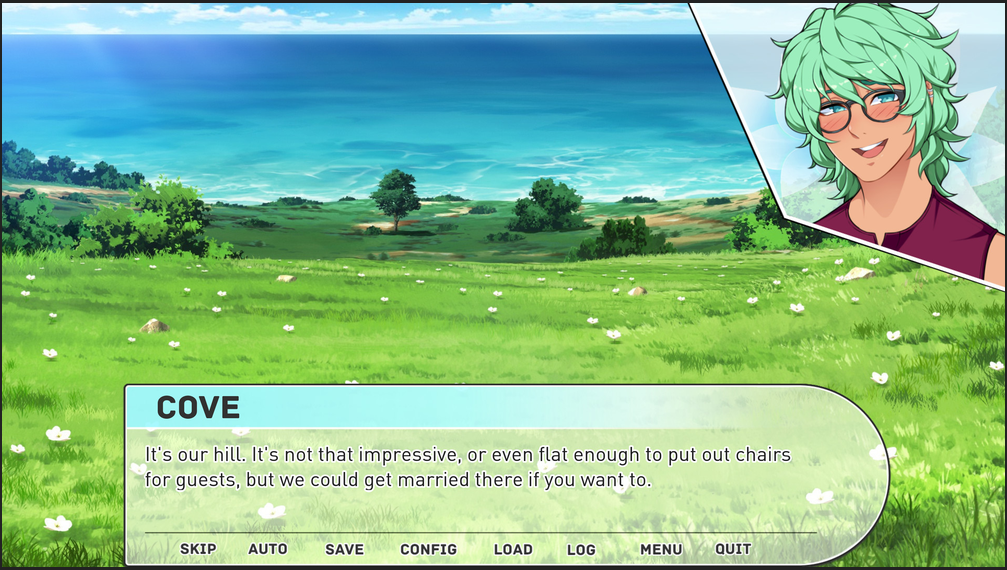
Here's an example: The game called "Our Life: Beginnings and Always" lets the female player create a character (usually looking similar to herself). Then, you get to choose from four fictional characters (boy/young man) that you find attractive. The rest of the game is simple: you create your "own life" with that in-game character. It lets you make choices based on the situation (e.g., cuddling with him, responding to something sweet the said or did, etc.). It's all about the character being as charming, romantic, and caring as possible—exactly what women want, right? Below is a screenshot from the game.
"The casual nature and simple rules of mobile RVGs lower barriers to gameplay in terms of time and skills in comparison to hardcore computer games... and thus are very friendly to female players." [1]
"Very friendly" might even be an underrepresentation. These types of games cover women's emotional needs and desires. They offer various romantic fantasies, they are highly interactive, they are easy to get lost in, they are constantly ongoing, and they are an escape and "ultimate wishful fulfillment" to many young urban Chinese women.
Anyways, back to science... 25% of the Chinese gaming market revenue is driven by women-oriented mobile games. On top of that, long-term emotions for fictional characters are frequent and perceived as normal in China.
"... many female RVG [Romantic Video Game] players immensely enjoy virtual romantic relationships and even fall in love with their romantic targets in RVGs: some devoted fans purchased gigantic LED billboard ads on landmark buildings in the megacities of Shenzhen and Shanghai to send birthday wishes to their virtual boyfriends." [1]
Some reports on social media go as far as saying that Chinese women have lost their interest in real-life romantic relationships (RLRRs) after playing these RVGs (Romantic Video Games). Therefore, today's study investigates the association between female-oriented RVGs and their real-life social interactions and romantic relationships. Specifically, a) whether the involvement in RVG (Romantic Video Games) is linked to the desire to develop RLRRs (real-life romantic relationships), and if so, b) whether and how RVG involvement influences RLRR desire.
The researchers speculate that RVG involvement is linked negatively to RLRR desire for some reasons. The "perfect" virtual romantic relationship may exceed the (real-life) expectations and thus lead to women being highly satisfied with the virtual experience. In addition, the virtual boyfriend is typically more attractive, attentive, caring, sweet, and "heartwarming" than the real-life counterpart.
Not just that, RLRRs can be stressful and cause worries about the relationship, as well as social and nonsocial sacrifices (lack of freedom to socialize), fights, time and effort investment, negative emotions, and pressure—just to name a few. These barely, if at all, exist in the virtual world.
On top of that, working long hours and high work pressure drains energy and restricts time to focus on finding and maintaining a romantic relationship. Last but not least, women who spend a lot of time in these ideal virtual worlds may foster an idealized view of romance that the real world can't satisfy.
To test their hypothesis, the researchers collected data from 353 Chinese women who play RVGs and are aged 18 or above. The majority (83%) were not involved in any romantic relationship; 48% of them had no romantic experience at all. 13% were dating, and 4% reported to be married. About 1/3 had played Otome games for 1-3 years, and another third played for 3-5 years. 89% of gamers spent money on RVGs, and 33% had spent more than $300 in total.
😍 I Found Love!
"The overall results suggest that high involvement in RVGs may lead to a low desire for real-life romantic relationships among Chinese female RVGs players." [1]
In other words, the more time they spent playing romance-themed games, the lower their interest in real-life dating and marriage. What's at work here are likely the reasons mentioned above: the more time they play, the higher the bar for real-life boyfriends to satisfy them. Basically, the virtual world is more appealing than the real thing.
Unsurprisingly, the more time they played, the more they identified with the protagonist and developed a strong para-social romantic relationship. This, in turn, reduced their interest in offline romantic relationships. Same thing again: the bar is raised for boyfriends in the real world if the virtual thing is more attractive (physical and psychological).
📝On a Personal Note...
Make of it what you want, but I see it as a dangerous trend. The western world, but more so China with its long-standing one-child policy, will feel the negative impact of this trend. Less romantic relationships mean fewer babies. It's not surprising that China has taken countermeasures.
However, all of this (developing these games) is completely rational and the right move as a company trying to make money. So I guess you can't really blame them?
Go out there and find someone you love, I guess. If you already have someone, go treat them today! Cheers,
Christian 🙂

References
[1] Wu et al., 2024